

Qwen3.8 Flash
Qwen3.8 Flash is a multimodal reasoning model from Alibaba. It is suited for coding assistance, agentic workflows, visual understanding, document and codebase analysis, desktop interaction, chart analysis, and long-video analysis.
Find out in one click
Reading happens in your browser; nothing is sent. The RAM cannot be read by a browser, so you tell it.
Which graphics card and how much RAM to run Qwen3.8 Flash?
The model keeps only 10 of its 512 experts active per word. The engine Strata puts the most used ones on the graphics card and the rest in RAM: card and RAM add up, and more graphics memory means more speed and less RAM needed.

GeForce RTX 3060 12 GB
The minimum the engine accepts. 41 to 64 tokens/s reported on this card (community benchmark on Strata 0.1.41, authors on 0.2.1).

GeForce RTX 3090
A 24 GB card lowers the RAM you need to 32 GB: it holds what the RAM cannot.

GeForce RTX 5090
The most graphics memory on a consumer card: each extra GB keeps about 700 more experts on the card.
Other machines
| Your machine | Version that fits | Announced speed | Notes |
|---|---|---|---|
| Mac with 64 GB or more (experimental) | Q2_0 from 64 GB, IQ3_S from 96 GB, UD-Q4_K_XL at 128 GB | up to 120 tokens/s on an M5 Max 128 GB | Memory cannot be upgraded. macOS 15 or newer, engine built on your Mac. |
| Ryzen AI Max+ 395, 128 GB (experimental) | UD-IQ4_XS | about 54 tokens/s | Linux, engine built from source (ROCm). |
Workstation, 96 GB of graphics memory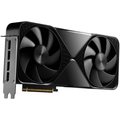 | The full model, standard 4-bit file | about 15 tokens/s estimated | NVIDIA RTX PRO 6000 Blackwell, $18,499.99 · See on Amazon |
Before you buy: check your PC
- Type of RAM. DDR4 and DDR5 sticks do not fit the same motherboard. The kits above are DDR4: check what your motherboard takes, and its maximum (often 64 to 128 GB).
- Power supply. Count about 750 W for an RTX 3090 and 1,000 W for an RTX 5090. Many office PCs have 450 to 600 W.
- Room in the case. Large cards take 3 slots and exceed 30 cm.
- A free PCIe x16 slot. Any recent desktop motherboard has one, whatever the processor; laptops and small-form-factor PCs often do not.
Speeds are announced by the authors of Strata or reported by users, mostly on an RTX 5070 12 GB: not measured by KernelFox. Kits are desktop DDR4 sticks (DDR5 on a recent platform; a laptop uses smaller SO-DIMM sticks). As an Amazon Associate, I earn from qualifying purchases.
Which compressed version of Qwen3.8 Flash to choose?
The original file weighs 360 GB. Other teams compress it: a smaller file and a faster model, at the cost of some quality. Start from the memory you have.
Coder, made for code only.
IQ3_S for quality, IQ2_XS or Q2_0 for speed.
UD-Q4_K_XL or UD-IQ4_XS.
Which version to choose?
The same model compressed more or less. The smaller the file, the less memory it takes and the faster it runs, but the more it differs from the 8-bit reference. “Gap” is the share of words where the compressed version does not pick the same most likely word as the 8-bit reference.
| Version | Memory needed | Gap to the 8-bit reference | Speed (RTX 5070 12 GB) | Who it is for | File |
|---|---|---|---|---|---|
| UD-Q4_K_XLUnsloth | about 88 GBof RAM | 6.9% | 7 à 8,5 tok/s | Best quality in this table. For 96 GB of RAM or more; slow. | Hugging Face |
| UD-IQ4_XSUnsloth | about 72 GBof RAM | 11.1% | – | For 96 GB of RAM, or a 128 GB Ryzen AI Max. | Hugging Face |
| IQ3_S best valueISTA-DASLab | 54.8 GB | 12.3% | 53 tok/s | The best choice with 64 GB of RAM. | Hugging Face |
| IQ3_XXSISTA-DASLab | 47 GB | 15.5% | 62 tok/s | For 48 to 56 GB of RAM, a bit faster. | Hugging Face |
| IQ2_XSISTA-DASLab | 39.2 GB | not measured | 79 tok/s | The authors’ pick for a 12 GB card. 41 to 64 tokens/s reported on an RTX 3060, not measured by KernelFox. | Hugging Face |
| Q2_0ISTA-DASLab | 37.6 GB | 19.4% | 94 tok/s | The fastest, one step down in quality. | Hugging Face |
| Coder (IQ1_M)ISTA-DASLab | 32 GBof RAM is enough | apart: code only | 55 tok/s | Code only, not for agents. | Hugging Face |
Coder: 91% of the full model’s score on SWE-bench Verified according to its authors, weaker elsewhere and in Chinese. Unsloth measures a sharp drop on agent tasks for a similar pruned DeepSeek model, so keep it for code only.
On faster cards, the authors of Strata announce (version 0.2.19, decoding): RTX 5090 at 161.6 tokens/s in IQ3_S, 115.9 to 117.6 in UD-Q4_K_XL and 155.5 in NVFP4; RTX 4090 at 117.1 in IQ3_S and 87.7 in UD-Q4_K_XL. Version 0.2.20 fixed garbled output and a zero acceptance of the draft with the NVFP4 files, and 0.2.21 a precision error when reading the prompt (the speed did not change). The column above stays on the RTX 5070 12 GB, the card for which every pack has a figure.
The gap is measured by the authors of the engine on 4,995 text positions (code, documentation, prose, five languages, an agent transcript), against the 8-bit file, not by KernelFox. Speeds are announced by the authors on an RTX 5070 12 GB with 64 GB of RAM. UD-Q5_K_XL and UD-Q6_K_XL reach 94.6% but need 128 to 192 GB. An independent test (Kaitchup) advises against going below the IQ3_S size for agent work. Strata on GitHub · quality measures · which model to pick · Mac · Ryzen AI Max · installation
How much memory for each level of compression
| Compression | 1 bit | 2 bits | 3 bits | 4 bits | 5 bits | 8 bits | Original (BF16) |
|---|---|---|---|---|---|---|---|
| Memory (RAM + graphics card, or shared memory) | 32 GB | 42 GB | 50 GB | 64 GB | 80 GB | 128 GB | 355 GB |
Unsloth’s own figures (Dynamic v3.1)
Unsloth is a team known for compressing open models. Its files can be run with Strata, llama.cpp or Unsloth’s own app. Their quality is given here as announced by Unsloth: how often the compressed model picks the same most likely word as the original model. It is not the same measure as the table above, so the two cannot be compared line by line.
| Version | File size | Quality kept (announced) | Who it is for | File |
|---|---|---|---|---|
| UD-IQ1_M | 74,5 GB | 79,7 % | The smallest. For chat and text, not for agents or tool calls. | Hugging Face |
| UD-IQ3_XXS | 82,0 GB | 85,4 % | A good middle: a clear step up in quality for 8 GB more. | Hugging Face |
| UD-Q4_K_XL | 111,3 GB | 92,3 % | The best quality that is realistic at home, with 128 GB of memory. | Hugging Face |
Memory sizes and quality figures are announced by Unsloth, not measured by KernelFox. Unsloth’s own tests show that the 1-bit version breaks down for agent work and tool calls (it loops, or fails to call tools): with it, keep the reasoning mode on and avoid agents. Add 1 to 2 GB if you use MTP, a technique that makes the model 1.3 to 1.7 times faster. Unsloth’s guide for this model
Try Qwen3.8 Flash through an API before you buy hardware
Not sure the model suits you? Test it through an API for a few cents before spending on a graphics card and RAM. If you like it, the hardware is higher up on this page.
Through an API this model costs $0.15 per million input tokens and $0.47 per million output tokens. A heavy coding-agent month (4 billion tokens) comes to about $78.
Choose local if
your data must not leave your machine, you work offline, or you run agents all day.
How a gaming PC runs 180 billion parameters
The model is a team of 24,576 small specialists, the experts. Each word needs only 10 of them.
The graphics card keeps the most used experts and learns during the conversation which they are. The RAM holds all of them, and the processor computes the ones the card does not have, at the same time. The SSD keeps a large lookup table.
A small helper guesses the next words and the big model checks them all at once: the same answer, 1.6 to 1.8 times faster.
How to install it, in three steps
1. Download Strata (free engine, MIT license) from its GitHub repository.
2. Run the installer: double-click START-HERE.bat on Windows, ./setup.sh on Linux or Mac. It detects your card and RAM and offers the right size.
3. Wait: about 70 GB to download, then the chat opens in your browser at 127.0.0.1:8080.
Your PC can slow down for 1 to 3 minutes the first time, while 35 to 55 GB load into RAM. This is normal.
Specifications
Where to get it
Download on Hugging Face GGUF files for local use Use it through OpenRouter LicenseTo run it on your own machine, the two easiest tools are Ollama and LM Studio.
Frequently asked questions about Qwen3.8 Flash
Can I run it with 8 GB of graphics memory?
No: the engine asks for 12 GB of graphics memory at least. Some users say they manage with 8 GB; that is not the official requirement and I did not keep it.
How much RAM do I need?
At least 32 GB for the Coder version, 48 GB for IQ2_XS, 64 GB for IQ3_S, 96 GB for the 4-bit files. With a 24 GB card, 32 GB is enough for IQ2_XS.
Do I need an NVIDIA card?
No. AMD RX 6800, 6900, 7000, 9000 and Radeon AI PRO R9700 cards work too. Intel Arc is experimental, on Linux.
Does it run on a Mac?
Yes, experimentally, on Apple Silicon (M1 to M5, macOS 15). Count 64 GB of memory for Q2_0. A Mac’s memory cannot be upgraded.
How fast is it?
Between 50 and 94 tokens per second on a 12 GB card depending on the size, more than reading speed. These figures are announced by the authors, not measured by KernelFox.
Does it read images?
Yes. Strata offers an “Images” option at install. On an AMD card it goes through the processor on Linux.
Is it free?
The engine Strata is free software (MIT) and the model downloads for free under its own license, which you should read. Only the hardware costs money.
How does the compressed version compare with the full model?
IQ3_S gives the same next token as the 8-bit reference 87.7% of the time; the Coder keeps 91% of the code score. A little less on reasoning and on Chinese.
See the full memory table
| Your hardware | Short chat (8k) | Documents (32k) | Long agent (128k) | Maximum (256k) |
|---|---|---|---|---|
| 8 GB GPU | with 128 GB more RAM (slower) | with 128 GB more RAM (slower) | with 128 GB more RAM (slower) | with 128 GB more RAM (slower) |
| 12 GB GPU | with 128 GB more RAM (slower) | with 128 GB more RAM (slower) | with 128 GB more RAM (slower) | with 128 GB more RAM (slower) |
| 16 GB GPU | with 128 GB more RAM (slower) | with 128 GB more RAM (slower) | with 128 GB more RAM (slower) | with 128 GB more RAM (slower) |
| 24 GB GPU | with 128 GB more RAM (slower) | with 128 GB more RAM (slower) | with 128 GB more RAM (slower) | with 128 GB more RAM (slower) |
| 32 GB GPU | with 128 GB more RAM (slower) | with 128 GB more RAM (slower) | with 128 GB more RAM (slower) | with 128 GB more RAM (slower) |
| 64 GB Mac | needs 112.8 GB | needs 113.4 GB | needs 115.8 GB | needs 119 GB |
| PC without a graphics card, 16 GB RAM | needs 112.8 GB | needs 113.4 GB | needs 115.8 GB | needs 119 GB |
| PC without a graphics card, 32 GB RAM | needs 112.8 GB | needs 113.4 GB | needs 115.8 GB | needs 119 GB |
| PC without a graphics card, 64 GB RAM | needs 112.8 GB | needs 113.4 GB | needs 115.8 GB | needs 119 GB |
| PC without a graphics card, 128 GB RAM | Fits (slow) | Fits (slow) | Fits (slow) | Fits (slow) |
Frozen facts (name, specifications, links) are fixed when the page is created. Scores, prices and download numbers: refreshed daily; last update 24 Nov 2026. Scores: Epoch AI (Capabilities & benchmarking, CC BY 4.0), adapted by KernelFox.